Comparing Lovart or AI design agents? Test the production workflow.
Generate with references, then finish headlines, logos, offer text, crops, and export-ready layouts in the Vibart canvas.
Introduction
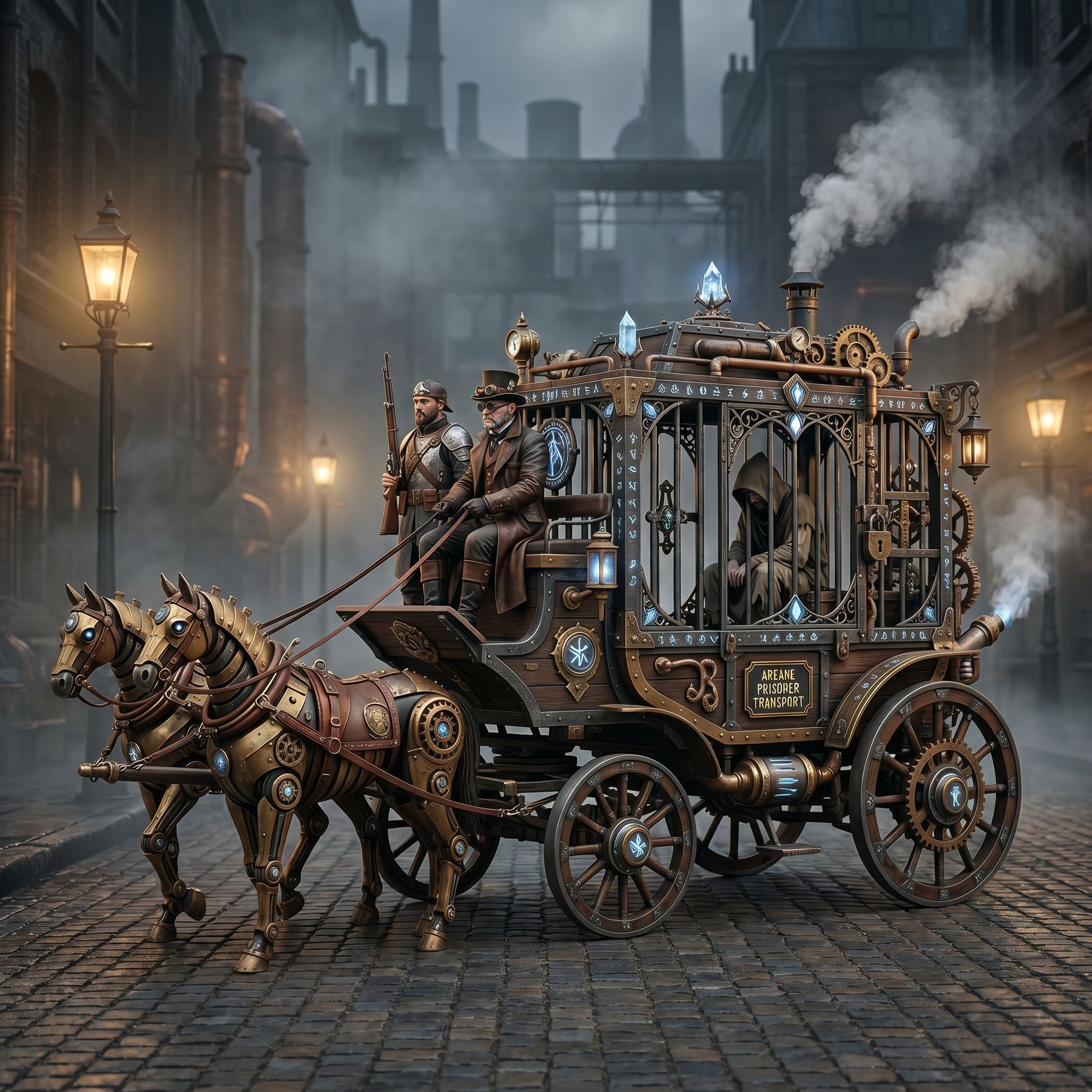
The Vibart community continuously demonstrates how AI creative workspaces can bridge conceptual art and production-ready assets. One standout example is the Steampunk Horse Car project, which transforms a steampunk aesthetic into a high-fidelity Unreal Engine-style render. This workflow showcases key capabilities of Vibart’s image generation, reference-guided editing, and canvas-based production design tools.
Understanding the Creative Direction
The Steampunk Horse Car project begins with a clear visual direction: converting a steampunk style into a realistic 3D-rendered aesthetic. This requires not just generative AI but precise control over lighting, materials, and perspective. Vibart’s workspace allows creators to iterate rapidly while maintaining artistic intent through layered canvas editing and reference-guided adjustments.
Crafting the Initial Prompt
Effective AI workflows start with strategic prompt engineering. For this project, creators likely began by specifying:
- Core aesthetic: Steampunk industrial design
- Target style: Unreal Engine photorealism
- Key elements: Mechanical horse chassis, brass gears, Victorian-era ornamentation
- Output goal: Game asset ready for 3D integration
Vibart’s prompt interface supports multi-step refinement, allowing creators to adjust parameters like lighting, texture density, and camera angle without restarting the entire generation process.
Leveraging Reference-Guided Editing
One of Vibart’s defining features is its ability to anchor AI generation in reference imagery. For the Steampunk Horse Car, creators could upload concept art or existing steampunk references to guide the AI toward consistent design language. This ensures:
- Brand or style continuity across multiple assets
- Accurate replication of mechanical details
- Reduced iteration time for complex compositions
Reference-guided editing is particularly valuable for ecommerce creators who need consistent product visuals or marketers requiring cohesive brand imagery.
Building on the Editable Canvas
Once the initial render is generated, Vibart’s canvas layer system enables granular refinements. Creators can:
- Adjust typography placement for game UI elements
- Add crop variants for different screen formats
- Fine-tune color grading to match Unreal Engine’s signature lighting
- Overlay vector elements for mechanical annotations
This non-destructive editing approach preserves the original AI output while allowing creative flexibility—a critical feature for production pipelines requiring multiple asset variations.
Exporting Production-Ready Assets
The final stage involves exporting assets optimized for their intended use. For game design, this means:
- High-resolution PNG or GLB exports for 3D pipelines
- Transparent backgrounds for UI integration
- Consistent naming conventions for asset libraries
Vibart’s export tools support batch processing and format customization, ensuring seamless handoff to downstream teams or platforms.
Applying This Workflow to Your Projects
Whether designing game assets, ecommerce product visuals, or marketing materials, this workflow framework applies broadly:
1. Define your target aesthetic and output requirements 2. Use reference images to anchor AI generation 3. Iterate through canvas layers for precise control 4. Export optimized assets for your specific use case
The Steampunk Horse Car example proves that AI creative workspaces are not just about rapid generation—they enable strategic, repeatable workflows for professional creators.
Conclusion
Vibart’s community-driven projects like the Steampunk Horse Car demonstrate how AI tools can evolve from experimental tech to essential creative infrastructure. By combining reference-guided editing, layered canvas control, and production-focused exports, creators can transform conceptual ideas into polished, usable assets—accelerating their workflow without sacrificing quality or creative control.
Sources and further reading
The workflow and platform rules in this article are grounded in these primary references. Confirm current rules for your market and channel before publishing.
- Vibart community work: Steampunk Horse CarVibart community · 2026-04-27
Next step: make one asset with the same workflow
Do not stop at the comparison page. Upload a reference, generate a direction, then keep copy and brand elements editable on the canvas.